
Prisoners' Legal Services of Massachusetts
  • About
    • Our Mission
      Pharmacy Manchester United Kingdom
    • Our Priorities
    • Our History
    • Our Team
    • Contact Us
  • Services
    • Individual Advocacy
    • Impact Litigation
    • Community Engagement
    • Policy Advocacy
    • Systemic Advocacy
  • Projects
    • Immigrant Detention Conditions Project
    • Racial Equity in Corrections Initiative
    • Prison Brutality Project
    • Women’s Project
  • Resources
    • Media & Public Outreach
    • PLS Blog
    • PLS Notes
  • Get Involved
    • Pro Bono
    • Events
    • Join Our Team
    • Join Our Email Lists
  • Menu Menu
Find Help Donate

Prison Brutality at Souza-Baranowski Correctional Center

August 18, 2021

Prison Brutality at Souza-Baranowski Correctional Center
Statement of Prisoners’ Legal Services

For immediate release: August 18, 2021

Prisoners Legal Services (PLS) appreciates the Globe Spotlight team’s reporting of the systemic assaults that occurred at SBCC in January of 2020 — over a year and a half ago. We also deeply appreciate statements made by legislators and CPCS acknowledging the problematic conditions at Souza Baranowski prison (SBCC) and the need for accountability. 

We hope that action by decision-makers will at long last bring to account the perpetrators of state sanctioned violence and those charged with oversight. We must prevent this from happening again and address the commonplace violence and abuse, often racialized, that continues to occur at the prison. Trauma inflicted on the individuals and their families at the hands of the state serves no justifiable purpose and harms us all. 

Immediately following the assaults of January 2020:

  • There were multiple news accounts of the campaign of brutality.
  • PLS, defense attorneys and multiple legislators, including those in leadership, visited with those incarcerated individuals, predominantly people of color, who were targeted in these assaults. 
  • PLS also held a press conference about the incident and provided details that we acquired after conducting dozens and dozens of interviews with clients. 
  • Advocates hand delivered a letter to the Governor’s office asking for an independent investigation and accountability. 
  • We similarly sent a letter during that same time period to U.S. Attorney Lelling. 
  • Advocates asked the Attorney General’s office to intervene. 
  • Defense Attorneys filed a lawsuit in superior court challenging the confiscation of legal documents by the DOC during the crackdown and the refusal to allow for attorney access for weeks while many of the assaults were taking place.
  • In 2020, legislation focused on transparency, data collection and accountability in correctional use of force practices was not advanced. 
  • There was a clear opportunity during negotiations around the policing bill to include correctional practices, but corrections was almost entirely written out of the bill. 
  • A commission established to study the issue was supposed to have started meeting in March of this year with recommendations due by December but has yet to even be constituted. Although such a commission could be helpful, it lacks independent oversight authority and recommendations alone do not provide the immediate solutions and accountability needed to respond to the scale of abuses.

During the 20 months that have gone by since January, PLS and the law firm Hogan Lovells have been carefully and diligently crafting a lawsuit to bring accountability, while brutality has continued regularly behind the wall. PLS has received 253 new brutality intakes since March 1, 2020, and 58 of those have been from SBCC. The assaults at SBCC in January of 2020 are symptomatic of the brutality that is endemic to the prison system. This continues because the DOC is repeatedly allowed to thumb its nose at the Legislature, circumvent the law, and act with impunity.

Brutality incidents are an acute example of the oppressive and counterproductive conditions at SBCC. People on the Northside of the prison are locked in their cells 21.5 hours daily, just a half hour less than the technical definition of restrictive housing, also known as solitary confinement. They have limited property, little to no programming or work opportunities, no access to group worship, and no ability to eat communally. Such units are not evidence-based and serve no rehabilitative purpose. 

We dare to be hopeful that this moment of attention will bring a sense of urgency and responsibility to those who have failed to respond to a desperate situation since January 2020. As former DOC Commissioner Dennehy said in her recent public statement on the issue, “There needs to be a long-term solution. There needs to be some institutionalized, permanent independent oversight and accountability. We need to have an independent ombudsman who does not answer to anyone.” She should know as she spent years working in this system and was pushed out when she tried to reform it.

We call for the following immediate action:

  • Swiftly pass An Act to create uniform standards in the use of force within correctional institutions (S.1541, H. 2480, Sen. Barrett, Reps. Keefe and Miranda)
  • Create an independent, long term, oversight authority for corrections
  • Effectuate the current ombudsman language that was completely ignored by DOC last session and passed again in the budget in July, and ensure it is independent of the DOC
  • End the super maximum security conditions that were created at SBCC in the wake of the January 2020 assaults

# # #

Prisoner’s Legal Services promotes the safe, humane, and lawful treatment of Massachusetts prisoners through civil rights litigation, administrative advocacy, client counseling, and outreach to policy makers and the public.
http://plsma.org/wp-content/uploads/2025/07/logo.png 0 0 Valerie http://plsma.org/wp-content/uploads/2025/07/logo.png Valerie2021-08-18 14:18:482021-08-18 14:18:48Prison Brutality at Souza-Baranowski Correctional Center

Testimony of Prisoners’ Legal Services of Massachusetts in support of S. 2030: “An Act establishing a jail and prison construction moratorium”

July 19, 2021

TESTIMONY OF PRISONERS’ LEGAL SERVICES OF MASSACHUSETTS IN SUPPORT OF S. 2030: “AN ACT ESTABLISHING A JAIL AND PRISON CONSTRUCTION MORATORIUM”

Thank you, Chairpersons Pacheco and Cabral, and the members of the committee, for this opportunity to speak in support of S.2030. 

My name is Sarah Nawab and I am an attorney at Prisoners’ Legal Services of Massachusetts, or PLS. As head of PLS’s Women’s Project, I am regularly in contact with incarcerated women throughout Massachusetts. Incarcerated women often contact PLS about the mistreatment they experience at the hands of prison staff, and these experiences would not go away in a so-called “trauma-informed prison.” Control over women’s bodies is an inherent part of incarceration and thus, as many of my colleagues here today have pointed out, there is no such thing as a “trauma-informed” prison.

In prison, women regularly undergo unclothed searches and are monitored while in the shower and while performing bodily functions. According to the Massachusetts Department of Correction, or DOC, 81% of the women in their custody have open mental health cases, and many women I have spoken to have suffered through DOC’s punitive mental health watch which the US Department of Justice found violated incarcerated peoples’ constitutional rights. 

Unclothed searches, monitoring during moments that should be private, and a punitive culture are all inherent and trauma-inducing elements of incarceration that will be a part of any prison DOC builds. We know from formerly incarcerated women we have heard from today that prisons and the trauma they inflict do not make our communities any safer. We need a five-year pause on the building of all prisons and jails to give communities the opportunity to find more effective ways to spend the tens of millions of dollars currently being spent on ineffective punitive systems. 

There are already underutilized laws on the books that can be implemented to decarcerate safely, such as the primary caretakers law, clemency, and medical parole, and with a five-year pause on prison and jail construction, and a reallocation of resources, communities can build systems to focus on healing and addressing underlying causes of harm and violence. Massachusetts has always been a national leader when it comes to progressive change and innovation, including in the realm of criminal justice. Many of the Commonwealth’s prisons were built in the name of reform, and those same prisons are now spaces of environmental degradation, brutality, inadequate healthcare, and infectious disease outbreak. With the prison population in Massachusetts consistently declining, now is the time to pause construction and show the country what a different way forward looks like.

I hope that you will report S.2030 out favorably and I thank you for your time.

Sarah Nawab 

Equal Justice Works Fellow, Attorney 

Prisoners’ Legal Services of Massachusetts

July 20, 2021

http://plsma.org/wp-content/uploads/2025/07/logo.png 0 0 Valerie http://plsma.org/wp-content/uploads/2025/07/logo.png Valerie2021-07-19 21:23:382021-07-19 21:23:38Testimony of Prisoners’ Legal Services of Massachusetts in support of S. 2030: “An Act establishing a jail and prison construction moratorium”

Press release: Why MA should have a moratorium on building prisons

July 19, 2021


Legislators Will Hear Testimony on Tuesday, July 20th

Prisoners’ Legal Services | Families for Justice as Healing | People Not Prisons

MEDIA ADVISORY

For immediate release: Contact: Carisa Cunningham

July 19, 2021

Why MA Should Have a Moratorium on Building Prisons

Legislators Will Hear Testimony on Tuesday, July 20th

The Joint Committee for State Administration and Regulatory Oversight will hear testimony on Tuesday, July 20, about S. 2030, legislation that would place a five-year moratorium on building new jails and prisons in Massachusetts.

Sponsored by Senator Jo Comerford, the bill requires that no state or public agency shall “study, plan, design, acquire, lease, search for sites, or construct new correctional facilities” for a period of 5 years. Advocates for the moratorium will testify that: 

  • Massachusetts has one of the lowest rates of incarceration in the country, yet the state spends more on jails and prisons than most other states. 
  • From 2011-2019, the state’s incarcerated population decreased by 21%, but in the same period. spending on incarceration increased by 25%. 
  • The Commonwealth spends about $1.4 billion annually operating jails and prisons and plans to spend an additional $730 million in capital funds on major jail and prison construction projects over the next 10 years.
  • A better future is possible if we invest in alternatives that address the root causes of incarceration.

Event details

Who: Joint Committee for State Administration and Regulatory Oversight

Formerly incarcerated people, family members, and advocates

What: Hearing on S. 2030, to place a 5-year moratorium on building prisons

When: Tuesday, July 20, 2021; 10:30 a.m. 

Where: The hearing is virtual and can be viewed at this link.

# # #

http://plsma.org/wp-content/uploads/2025/07/logo.png 0 0 Valerie http://plsma.org/wp-content/uploads/2025/07/logo.png Valerie2021-07-19 21:17:282021-07-19 21:17:28Press release: Why MA should have a moratorium on building prisons

Prisoner advocates seek overhaul of inmate mental health treatment

July 7, 2021

PRISONER ADVOCATES SEEK OVERHAUL OF INMATE MENTAL HEALTH TREATMENT

June 28, 2021
CommonWealth Magazine
By Shira Schoenberg

Bill would require jails to send prisoners to health care facilities 

SEVEN MONTHS AFTER the Department of Justice issued a scathing report about the treatment of inmates with mental illness in Massachusetts prisons, advocates for prisoners and people with mental illness are urging the Legislature to overhaul the way mental health treatment is provided to incarcerated people. 

“No one with a behavioral health condition should be treated the way these individuals are being treated right now,” said Monica Luke, chair of the National Alliance on Mental Illness’s Massachusetts advocacy committee. 

A bill sponsored by Sen. Jamie Eldridge, an Acton Democrat, and Rep. Brandy Fluker Oakley, a Boston Democrat, which had a hearing Monday before the Joint Committee on Mental Health, Substance Use, and Recovery, would institute changes at both state prisons and county jails and would require that many prisoners in crisis be moved out of jails into health care facilities. Eldridge said he filed the bill as a direct result of the Department of Justice report. 

Laura Wagner, executive director of the Unitarian Universalist Mass Action Network and a supporter of the bill, emphasized that a lot of training is required to become a mental health clinician. “The idea somehow that all changes and a person with a high school diploma, a Department of Correction correctional officer is somehow now responsible for providing care, assessing the seriousness of a situation, and deciding the best interventions — it violates any ethics in any profession,” Wagner said in an interview. The Department of Justice report, which was released in November 2020 after a two-year investigation, found that that the state Department of Correction was violating its constitutional obligations by failing to provide adequate mental health services to prisoners. The report detailed horrific stories of prisoners seriously harming themselves while correctional officers failed to intervene and even egged them on. The report found that rather than providing treatment, prisons kept suicidal prisoners in restrictive conditions similar to solitary confinement where they had limited access to books, personal items, or recreation. Many prisoners harmed themselves while on “mental health watch.” 

Continue reading…

http://plsma.org/wp-content/uploads/2025/07/logo.png 0 0 Valerie http://plsma.org/wp-content/uploads/2025/07/logo.png Valerie2021-07-07 19:38:122021-07-07 19:38:12Prisoner advocates seek overhaul of inmate mental health treatment

Legislators convene committee on race equity

July 7, 2021

LEGISLATORS CONVENE COMMITTEE ON RACE EQUITY

June 24, 2021
The Bay State Banner
By Morgan C. Mullings

Community members on Monday advocated for racial justice across the Commonwealth to the chairs of the new Joint Committee on Racial Equity and Civil Rights, a legislative group tasked with brainstorming policy for impacting communities.

The two chairs, Rep. Bud Williams and Sen. Sonia-Chang Diaz, asked those who gave testimony for their thoughts on reparations, the housing crisis, correctional injustices and recovery from the pandemic.

Brandy Fluker Oakley, representing the 12th Suffolk District after her primary win in September, noted that the hearing broke the record for the number of Black and brown people testifying at the State House.

“Because of the amount of people that showed up and exercised their voice in ways that they had not necessarily done before, I think it’s a testament to the need for the committee,” Fluker Oakley told the Banner.

The newly-added member of the Massachusetts Black and Latino Legislative Caucus  said she wants to focus on all the federal money coming into the Commonwealth via federal COVID-19 recovery aid packages, such as the American Rescue Plan.

“I think there’s a really unique opportunity for this committee, and in conjunction with the [Caucus] to really put pressure on the state powers, the Legislature and the governor’s office to make sure that those dollars are used equitably,” Fluker Oakley said.

Continue reading…

http://plsma.org/wp-content/uploads/2025/07/logo.png 0 0 Valerie http://plsma.org/wp-content/uploads/2025/07/logo.png Valerie2021-07-07 19:36:562021-07-07 19:36:56Legislators convene committee on race equity

Sheriffs Agree To Shave Costs Of Phone Calls For Inmates

July 7, 2021

SHERIFFS AGREE TO SHAVE COSTS OF PHONE CALLS FOR INMATES

June 22, 2021
WBUR News
By Colin A Young

Every sheriff’s department in Massachusetts has agreed to provide people incarcerated at county jails and houses of correction with at least 10 minutes of free phone calls each week and to reduce the cost of subsequent calls, the Massachusetts Sheriffs’ Association announced.

Currently, each county sheriff’s department can set its own cost for inmate telephone calls. The money raised is put towards educational programs, vocational skills training and other services designed to prepare inmates for re-entry into society. While the state Department of Correction charges 10 or 11 cents per minute for phone calls, some sheriffs have charged more than 40 cents per minute for calls, according to Prisoners’ Legal Services of Massachusetts.

In addition to making the first 10 minutes of phone calls each week free for inmates, the state’s 14 sheriffs also agreed to charge no more than 14 cents a minute after the initial 10 minutes expires.

“My fellow Sheriffs and I know that contact with friends and loved ones is an essential component for preparing justice-involved individuals for successful reentry into society,” said Suffolk County Sheriff Steven Tompkins, who serves as president of the Massachusetts Sheriffs’ Association. “This unanimous decision by the fourteen Sheriffs is reflective of our commitment to those in our care and custody. As the nature of corrections continues to evolve in the Commonwealth, we are proud to re-affirm our commitment to maintaining and strengthening familial bonds.”

The Massachusetts Sheriffs’ Association said the new policy will go into effect no later than Aug. 1.

Last week, Connecticut Gov. Ned Lamont signed a law making telephone calls free for inmates and their families. Prisoners’ Legal Services backs a bill (S 1559/H 1900) filed here by Sen. Cynthia Creem and Rep. Chynah Tyler to provide telephone calls for no cost to incarcerated people at all state prisons and county jails and houses of correction.

Continue reading…

http://plsma.org/wp-content/uploads/2025/07/logo.png 0 0 Valerie http://plsma.org/wp-content/uploads/2025/07/logo.png Valerie2021-07-07 19:33:322021-07-07 19:33:32Sheriffs Agree To Shave Costs Of Phone Calls For Inmates

Racial equity panel uses first hearing to build to-do list

July 7, 2021

RACIAL EQUITY PANEL USES FIRST HEARING TO BUILD TO-DO LIST

June 14, 2021
The Patriot Ledger
By Chris Lisinski

A diverse stream of lawmakers, activists and community leaders produced a lengthy list of racial equity proposals Monday, June 14, kicking off one of the Legislature’s most daunting undertakings to date: confronting centuries of structural racism ingrained in nearly every facet of public life.

Created by the Legislature in January, the Committee on Racial Equity, Civil Rights, and Inclusion convened its first hearing as it charts a course for this session. Speakers outlined priorities they hope to see lawmakers address – from enforcing a 2018 criminal justice reform law to making driver’s licenses available to undocumented immigrants, from disaggregating data collection to offering reparations for slavery – in steps toward achieving the equality long promised but often not delivered for communities of color.

Legislative leaders created the panel  after last year’s nationwide racial justice protests and police reform legislation, but the committee’s mission will be far broader.

Sen. Sonia Chang-Diaz, one of the group’s co-chairs, said the panel is well aware that “structural racism and exclusion are marbled throughout the different institutions and existing policies of our commonwealth.”

“Last year, the Legislature was laser-focused on reforming public safety, but our work to end structural racism is not confined to the public safety system and it is not done in our commonwealth,” she said. “While we may not be able to do it all and end structural racism this legislative session, we need to begin working on pressing priorities so that we can do that piece-by-piece work.”

The COVID-19 pandemic’s influence was also apparent in the testimony. Black and Latino communities have been hit disproportionately hard during the health crisis, often facing higher rates of infection, challenges accessing vaccines, and greater economic harm than white communities.

Continue reading…

http://plsma.org/wp-content/uploads/2025/07/logo.png 0 0 Valerie http://plsma.org/wp-content/uploads/2025/07/logo.png Valerie2021-07-07 19:28:062021-07-07 19:28:06Racial equity panel uses first hearing to build to-do list
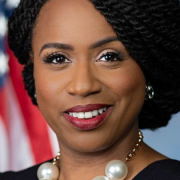
Ayanna Pressley

Pressley, Advocates Re-Introduce Comprehensive ‘People’s Justice Guarantee’ Bill Package to Transform Criminal Legal System

June 29, 2021

PRESSLEY, ADVOCATES RE-INTRODUCE COMPREHENSIVE ‘PEOPLE’S JUSTICE GUARANTEE’ BILL PACKAGE TO TRANSFORM CRIMINAL LEGAL SYSTEM

March 11, 2021
Black Star News

In close partnership with advocates, Rep. Ayanna Pressley (MA-07) today re-introduced the People’s Justice Guarantee (PJG) – a comprehensive, decarceration-focused resolution that outlines a framework for a fair, equitable and just legal system.

The resolution calls for an ongoing and participatory “peoples process” that centers the dignity and expertise of those impacted by the broken carceral state.

“In this moment, we have an opportunity and responsibility to pursue bold, structural reforms that shift resources away from institutions that perpetuate brutality and injustice and invest in solutions that promote community safety and center the dignity and humanity of all people,” Pressley said. “The People’s Justice Guarantee offers a vision of true justice, healing and accountability. It would reduce our prison population and finally usher in an era of mass decarceration. Creating a just legal system is a matter of political will—plain and simple—and it’s time we demonstrate the courage necessary to make it a reality.”

The United States criminal legal system has institutionalized a culture of cruelty, disproportionately harming Black, Latinx, and Indigenous communities. Overcriminalization, police violence, and mass incarceration are the byproducts of decades of policy violence rooted in a fundamentally flawed approach to public safety. Because our laws fail to provide the necessary resources to ensure all people have their basic needs met, the criminal legal system continually destabilizes the lives of millions, traumatizes families, and decimates entire communities.

Continue reading…

https://plsma.org/wp-content/uploads/2025/08/Screenshot_2021-03-11-Ayanna-Pressley.png 315 600 Valerie http://plsma.org/wp-content/uploads/2025/07/logo.png Valerie2021-06-29 02:09:262021-06-29 02:09:26Pressley, Advocates Re-Introduce Comprehensive ‘People’s Justice Guarantee’ Bill Package to Transform Criminal Legal System

Massachusetts Department of Correction Gives a Lesson in How to Get Around Solitary Confinement Reforms

November 20, 2019

MASSACHUSETTS DEPARTMENT OF CORRECTION GIVES A LESSON IN HOW TO GET AROUND SOLITARY CONFINEMENT REFORMS

November 20, 2019
Solitary Watch
By Katie Rose Quandt

In April 2018, advocates in Massachusetts celebrated the signing of the Criminal Justice Reform Act (CJRA), which mandated changes throughout the state’s criminal justice system. Included among the reforms were some new restrictions on the use of solitary confinement, set to go into effect at the beginning of 2019.

But advocates say that instead of following the law’s provisions in earnest, the Massachusetts Department of Correction (DOC) has done its best to circumvent the solitary reforms and weaken the law’s oversight mechanisms.

“They’re not complying with the letter of the law in some regards, and they’re avoiding the spirit of the law in other regards,” said Bonnie Tenneriello, a staff attorney at Prisoners Legal Services of Massachusetts (PLS). Her organization is pushing back against the DOC’s weak application of the CJRA’s solitary rules, alongside other advocacy organizations and some legislators.

Read more…

http://plsma.org/wp-content/uploads/2025/07/logo.png 0 0 Valerie http://plsma.org/wp-content/uploads/2025/07/logo.png Valerie2019-11-20 17:22:012019-11-20 17:22:01Massachusetts Department of Correction Gives a Lesson in How to Get Around Solitary Confinement Reforms

Editorial: The Horrors of Unfair Prison Visitation Practices

October 30, 2019

EDITORIAL: THE HORRORS OF UNFAIR PRISON VISITATION PRACTICES

October 30, 2019
Valley Advocate
Dave Eisenstadter

This treatment of people visiting their relatives in jail is unacceptable and is an affront to a vulnerable population. Last year, a comprehensive criminal justice bill was supposed to mandate more humane treatment of prisoners. But while the bill focused on some good topics, including bail reform, expungement, and increased use of diversionary programs, harsher visitation provisions were also enacted by the state’s Department of Corrections.

Northampton state Rep. Lindsay Sabadosa, a co-sponsor of the prison reform bill, told Adatia that the department enacted those visitation changes and is not fully complying with the reform bill. She specifically said that the Legislature asked the Department of Corrections to do one thing and it is doing another.

The new bill would disallow limiting unique individuals who can visit an inmate, loosen clothing restrictions, allow for reasonable touch among inmates and visitors, and otherwise facilitate more visits to inmates.

It is at the top of the list of legislative priorities for advocacy organization Prisoners’ Legal Services of Massachusetts, which has assembled a fact sheet of the benefits of the bill. Among them are that prisoners who receive visits have fewer instances of misconduct, visitations help mitigate the risk for children with incarcerated parents of negative social outcomes and help the prisoners themselves when they re-enter society, and that visitations are crucial to the well-being of prisoners, their families, and the people who work in prison.

At the recent hearing, Prisoners’ Legal Services representative Bonnie Tenneriello, an attorney, called the current policies “nonsensical” and “contrary to the idea of rehabilitation and re-entry.”

Read more…

http://plsma.org/wp-content/uploads/2025/07/logo.png 0 0 Valerie http://plsma.org/wp-content/uploads/2025/07/logo.png Valerie2019-10-30 17:26:362019-10-30 17:26:36Editorial: The Horrors of Unfair Prison Visitation Practices
Page 2 of 3123

Questions?

If you have additional questions or concerns that you would like assistance with, please call us during our intake hours on Monday (or Tuesday if Monday is a holiday) from 1:00pm – 4:00pm.

Contact Us

Get Involved | Find Help | Donate

© 2025 Prisoners’ Legal Services of Massachusetts | Privacy Policy | Racial Equity Statement
Website by Compete Now

Get Involved | Find Help | Donate

  • About
    • Our Mission
      Pharmacy Manchester United Kingdom
    • Our Priorities
    • Our History
    • Our Team
    • Contact Us
    • Back
  • Services
    • Individual Advocacy
    • Impact Litigation
    • Community Engagement
    • Policy Advocacy
    • Systemic Advocacy
    • Back
  • Projects
    • Immigrant Detention Conditions Project
    • Racial Equity in Corrections Initiative
    • Prison Brutality Project
    • Women’s Project
    • Back
  • Resources
    • Media & Public Outreach
    • PLS Blog
    • PLS Notes
    • Back
  • Get Involved
    • Pro Bono
    • Events
    • Join Our Team
    • Join Our Email Lists
    • Back
  • Find Help
  • Donate
  • As of February 1, 2026, PLS has a new address located on a different floor in the same building.

    Our new address is:

    Prisoners’ Legal Services
    50 Federal Street, 7th Floor
    Boston, MA 02110

    Any mail already in transit will be forwarded. Thank you!